Hypermobile Daily Life: The Habits Beyond the Gym That Protect Bendy Joints
Hypermobility’s management happens mostly outside the gym — in the standing habits, the desk hours, the sleep positions where lax joints quietly hang on their ligaments all day. The daily-life guide: the posture traps, the setups and the pacing.

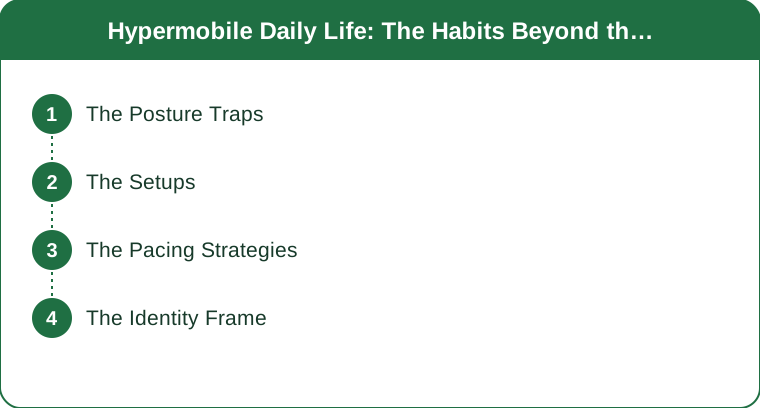
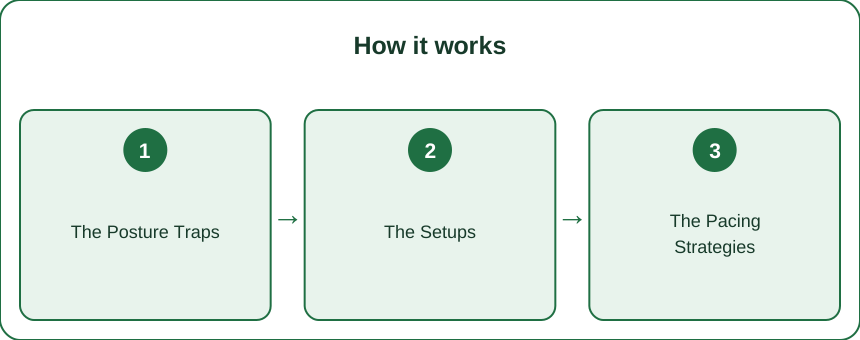
The Posture Traps
The everyday hanging habits: the locked-knee stand (the hypermobile default — hanging on knee ligaments instead of standing on muscles; the micro-bend habit from the training chapter as all-day policy; the soft-knees cue at the sink, the queue, the gallery), the hip-hang lean (the one-hip standing slouch that lax joints love — the weight-both-feet reset), the elbow-hyperextension lean (the arm propped at end-range — the desk-lean and yoga-plank versions both), the W-sit-and-pretzel tier (the floor-sitting positions hypermobile bodies find comfortable BECAUSE they hang on ligaments — the cross-legged-with-support upgrade), and the awareness practice (the hourly body-scan from the posture chapters — the hanging habits noticed are half-fixed; the joints’ comfort was the trap all along).
The Setups
Environment as joint support: the desk configuration (the supported everything — the lumbar-supported chair, the feet-flat foundation, the armrest height that stops elbow-hanging; the ergonomic chapter’s checklist with hypermobile stakes), the sleep positions (the pillow architecture — between knees for side sleepers, under knees for back sleepers; the joints supported through eight unconscious hours; the stomach-sleeping neck-crank retired per the pillow chapter), the footwear layer (the supportive-shoe lean for the flat-and-flexible hypermobile foot — the barefoot-training benefits arriving EXTRA gradually here; the arch-support tier as daily equipment for many), and the bag-and-carry habits (the crossbody-and-backpack over the shoulder-hang — the carrying that doesn’t ask joints to dangle loads).

The Pacing Strategies
Managing the symptomatic tier: the boom-bust cycle (the hypermobile pattern of good-day-overdo-then-crash — the pacing doctrine from the chronic-condition world; the 80%-of-capacity rule on good days that prevents the bust), the flare protocol (the symptomatic days downshifting to the supported-and-gentle menu — the pool, the walk, the isometrics; the swap-not-stop rule with joint-specific swaps), the fatigue honesty (symptomatic hypermobility often travels with fatigue — the energy-audit approach and the rest-without-guilt chapter as management tools, not luxuries), and the professional team note (the symptomatic-tier deserves the physio who knows hypermobility — the condition-aware professional from the training chapter; the daily-life adjustments coached to your specific joints).
The Identity Frame
Living well bendy: the strengths acknowledgment (the hypermobile body’s genuine gifts — the range that yoga and dance celebrate, managed; the party tricks retired but the capabilities kept), the long-game logic (the daily habits compound exactly like the training — the twenty years of soft knees and supported desks arriving at better joints than the twenty years of hanging; the invisible maintenance with visible decades), the self-knowledge dividend (the hypermobile person who knows her patterns manages what the undiagnosed one endures — the naming that converts mystery pain into managed traits), and the community note (the hypermobility world’s shared wisdom — the online communities and condition-aware practitioners where the daily hacks circulate; the diagnosis that comes with a toolkit attached). Soft knees, supported sleep, paced days: the bend, befriended.
Unlock the knees everywhere, support the desk and sleep, pace the good days at 80%, know your patterns. Hypermobile management is mostly daily habits — the joints hang or stand by your defaults.
Keep Reading
This article is for general informational purposes only and is not medical advice. Always consult a qualified health professional for guidance specific to you.