What Actually Triggers a Hypermobility Flare-Up?
Quick Answer: The most common hypermobility flare triggers are sudden changes in activity level (both too much and too little), poor sleep, weather and barometric pressure shifts, and stress — and most people can identify their personal top two or three once they log flares for a few weeks.
A flare feels random until you start writing down what happened in the 24-48 hours before it. Almost everyone finds a pattern faster than they expect.

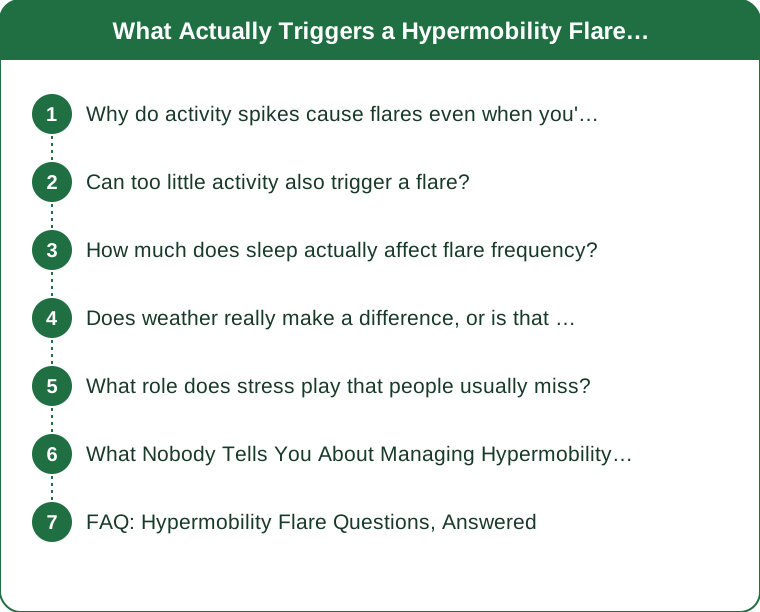
Why do activity spikes cause flares even when you’re ‘being careful’?
Joints with hypermobility rely more heavily on muscle control for stability than average joints do, since the ligaments themselves offer less natural restraint. A sudden jump in activity — a new class, a long hike, even standing more than usual at an event — asks stabilizing muscles to work harder before they’ve adapted, and the joint pays the price 24-48 hours later, which is why the connection often gets missed.
Can too little activity also trigger a flare?
Yes, and this surprises people — prolonged rest weakens the stabilizing muscles that hypermobile joints depend on more than most, so a flare after a sedentary week isn’t necessarily unrelated to activity, it’s the opposite problem. This is why the target for hypermobility isn’t ‘less movement,’ it’s consistent, moderate movement that avoids both spikes and long gaps.
How much does sleep actually affect flare frequency?
Poor sleep reduces the body’s tissue repair capacity and lowers pain thresholds, and many people with hypermobility report flares clustering after two or more nights of disrupted sleep. Sleep quality is one of the more overlooked triggers because the flare often shows up a day or two later, well after the bad night itself.

Does weather really make a difference, or is that just folklore?
Barometric pressure changes are one of the more consistently reported triggers in patient surveys, even though the exact mechanism isn’t fully settled science. Whatever the cause, enough people notice flares before a weather front moves in that it’s worth tracking alongside the more obvious triggers like activity and sleep.
What role does stress play that people usually miss?
Stress increases muscle tension and can change how you move without you noticing — clenching, guarding, or altering your gait pattern under stress puts joints in positions they’re not used to. Emotional stress and physical flare risk are more linked than most people assume, which is part of why flares often show up during busy or high-pressure weeks.
What Nobody Tells You About Managing Hypermobility Flares
Most advice focuses on avoiding triggers entirely, but total avoidance usually isn’t realistic or even useful — the more practical skill is recognizing early warning signs (a specific joint feeling ‘off’ a day before real pain starts) and adjusting activity slightly rather than stopping completely. People who track flares for a month are often surprised that their top trigger isn’t the one they expected.
FAQ: Hypermobility Flare Questions, Answered
How long does a typical flare last?
Most flares from a single identifiable trigger resolve within 3-7 days with rest, gentle movement, and support, though flares with multiple stacked triggers can last longer.
Should you stop exercising completely during a flare?
Usually not — gentle, joint-friendly movement (like walking or water-based exercise) often helps more than complete rest, though the specific joint that’s flaring may need a short break.
Is it worth keeping a flare journal?
Yes — most people identify their top two triggers within 3-4 weeks of simple daily logging, which is often enough to cut flare frequency noticeably.
TL;DR:
- Both activity spikes and prolonged inactivity can trigger flares — consistency matters more than intensity
- Poor sleep and stress are commonly underrated triggers that show up a day or two later
- Weather and barometric pressure changes are a real, commonly reported trigger
- A simple flare journal usually reveals your personal top triggers within a month
Flares feel unpredictable until you start tracking — most people find the pattern faster than they expect.
Keep Reading
This article is for general informational purposes only and is not medical advice. Always consult a qualified health professional for guidance specific to you.